 22 Sep 2026
Rubbish chutes make daily life in HDB flats much easier. You open the chute door, drop your waste inside, close the door and carry on with your day. Most residents give the system little thought until a smell enters the kitchen, the door gets stuck or insects appear.
These small signs can point to common HDB rubbish chute problems that need attention. Some issues need a quick clean or minor repair. Others can signal worn parts or damage within the chute system.
Knowing how the system works helps you spot trouble before it grows. It can also help you decide whether to contact your town council or arrange a professional inspection.
How an HDB Rubbish Chute System Actually Works
An HDB rubbish chute may look like a simple opening in the wall, but several parts work together to move waste from your flat to a collection point.
The main chute runs through the building and carries rubbish downwards. Each connected flat has a hopper door that gives residents access to this chute. The door should form a firm seal after each use.
The system includes three key parts-
- Main chute- The vertical channel that carries rubbish down the block
- Hopper door- The door inside or near the flat where residents place waste
- Refuse trap or collection area- The lower section where waste gathers before removal
A good seal matters. Gaps around the hopper can let smells, insects and warm air enter the home. A damaged door can also create hygiene concerns.
Problems in one part may affect other parts. A blockage deep inside the main chute, for example, may cause smells near several homes. A loose hopper door may affect one unit alone.
Common Problems: Bad Odour, Stuck Hopper Doors, Pests and Chute Blockages
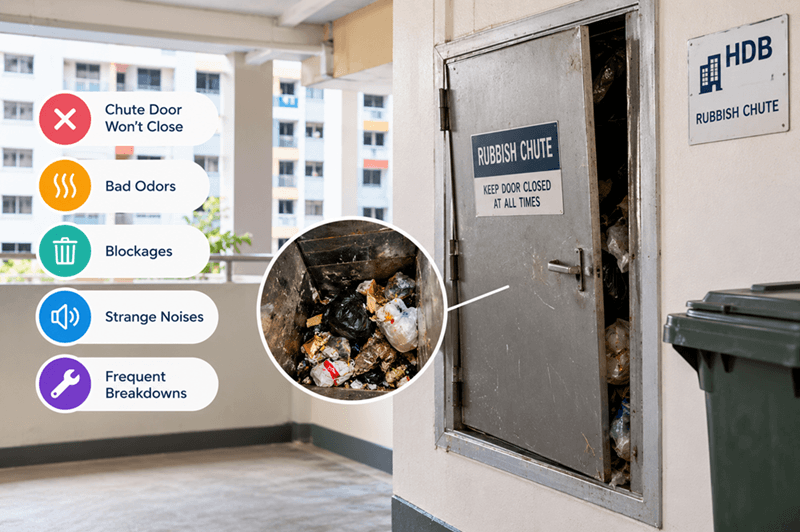
Residents tend to notice common HDB rubbish chute problems through sight, smell or sound. A change in how the door moves can give the first warning.
Bad Smells From the Chute
A rubbish chute odour can enter a flat if the hopper door does not seal properly. Waste stuck inside the chute can also create strong smells.
Food waste, liquid spills, grease and dirty packaging can coat chute surfaces. Over time, these materials create a breeding ground for bacteria.
A smell that remains after you clean the hopper door may come from deeper inside the system.
Stuck or Difficult Hopper Doors
A hopper door should open and shut without force. Rust, bent parts, loose screws, damaged seals or worn hinges can stop this movement.
Do not force a stuck door. Extra pressure can bend the frame or break another part.
Pest Activity
A rubbish chute pest problem can involve cockroaches, ants, flies or other unwanted visitors. Chutes offer pests food, moisture, shelter and paths between floors.
A gap around the hopper door can give them an easy route into your home.
Chute Blockages
Large rubbish bags and bulky objects can jam the chute. Wet waste may also stick to the walls and catch other rubbish.
A blockage can lead to smells, pest activity and waste build-up. Residents should avoid pushing large objects into the hopper.
What Causes a Chute Door to Stop Closing Properly?
A hopper door that stays open by a few millimetres may not look serious. Yet even a small gap can let smells and pests through.
A problem with the hinge of a rubbish chute door ranks among the common causes of poor closure. Hinges carry the weight of the door each time you use it. Years of use can wear the hinge, loosen its fittings or pull the door out of line.
Other causes include-
- Rust around the hinge or frame
- Loose screws and fittings
- A bent hopper door
- A damaged seal
- Dirt around the closing edge
- Damage from force or impact
Start by checking the door edge for visible dirt. Clean the contact area and test the door. If it still fails to shut, avoid pulling, bending or striking it.
A worn hinge needs the right repair. Fixing a rubbish chute door hinge issue at an early stage can protect the frame from extra strain.
When a Problem Is a Simple Fix vs. When It Signals Ageing Chute Infrastructure
Not every fault means you need a new chute. Some common HDB rubbish chute problems come from dirt, loose fittings or a worn seal.
A minor issue may need a simple fix when the door and frame remain in sound condition. Cleaning the door edge, tightening a suitable fitting or replacing a small worn component may restore normal use.
Ageing infrastructure can show a different pattern.
Watch for signs such as deep rust, cracks, a warped frame, repeated door faults, large gaps or damage across several parts. A strong rubbish chute odour that returns after cleaning can also point to a poor seal or deterioration.
Repeated repairs deserve attention. If one repair fails and another fault appears soon after, the whole unit may need an assessment.
At this stage, residents may choose to speak with an HDB rubbish chute replacement contractor to check whether repair still makes sense or whether replacement offers a sounder solution.
The aim should not be to replace parts without cause. A proper inspection should identify the source of the fault first.
Town Council Responsibility vs. Individual Unit Responsibility for Chute Issues
Responsibility can depend on where the fault sits.
Town councils manage common property within HDB estates. Problems involving shared refuse systems, central chute sections, common collection areas or block-wide faults may need attention from the relevant town council.
A problem linked to a hopper inside an individual flat may fall under the flat owner’s responsibility in some cases.
The location of the fault gives a useful clue.
If several neighbours report the same smell or blockage, the cause may sit within the shared system. If your hopper door alone has a broken hinge or damaged frame, the problem may relate to your unit.
A rubbish chute pest problem can cross both areas. Pests may breed within the shared chute but enter a home through gaps around one hopper door.
When you cannot identify the source, contact your town council and describe what you see. Explain whether the issue affects your flat alone or other homes as well. This can help determine the next step.
How to Reduce Rubbish Chute Problems at Home?
Good habits can reduce wear and hygiene issues. They cannot prevent every fault, but they can protect the hopper and keep waste from building up around it.
Tie rubbish bags before placing them inside the chute. Keep liquid waste out of the system where possible. Never force oversized bags, boxes or bulky items through the hopper.
Wipe the hopper door and surrounding frame when dirt appears. Food residue near the opening can cause a rubbish chute odour and attract insects.
Pay attention to how the door feels. A new squeak, loose movement or uneven closing action may signal a rubbish chute door hinge issue before the hinge fails.
Check the area for pest droppings, egg cases, insects or gaps around the door. Early action can stop a rubbish chute pest problem from spreading through the home.
Conclusion
Most rubbish chute issues start small. A loose hinge, weak seal, small gap or strange smell may seem easy to ignore. Yet these signs can grow into hygiene concerns, pest entry, stubborn smells or a door that no longer works.
Watch how your hopper door opens and closes. Keep the area clean, avoid forcing large waste into the chute and act when you spot damage.
Early attention can keep a small repair from turning into a larger and more disruptive job. It also helps keep your home cleaner, safer and more comfortable for everyone who lives there.
Facing a Chute Issue at Home?
If your rubbish chute door won't close, smells persistently or looks worn out, it may need a professional look.
Frequently Asked Questions:
The smell may come from waste inside the shared chute, residue around the hopper, a blockage or a door that no longer seals. Clean the accessible surfaces around your hopper. If the smell remains, report the issue or seek an inspection.
It depends on the source and location of the problem. Town councils handle issues linked to common property, while faults involving fittings inside a flat may fall under the owner’s responsibility. Check with your town council when the cause remains unclear.
Yes. Cockroaches and other small pests can pass through gaps around a damaged or poorly sealed hopper door. A firm seal helps block their path into the flat.
There is no single inspection schedule that suits every hopper. Residents should check the door during routine cleaning. Look for rust, loose hinges, cracks, gaps, damaged seals and changes in how the door closes.
Severe rust, a warped frame, repeated faults, broken sections, persistent gaps and repairs that fail can signal deeper wear. These are common HDB rubbish chute problems in older units and may justify a full professional assessment.