
 22 Sep 2026
 Not all rubbish chutes work in the same way. An HDB block and a private condominium may use chutes for the same purpose, but the design, access points, repair process, and management can differ.
Understanding the condo vs hdb rubbish chute system setup helps residents know who to contact when a problem appears. It can also cut delays when a chute door jams, waste gets stuck, or bad smells spread through the building.
The main chute system differences come from building design and the party that manages the property. HDB blocks tend to follow a shared public housing setup. Condos can use layouts that suit the needs of each development.
Here is what residents need to know.
How HDB Chute Systems Are Typically Designed
Many HDB blocks use a shared vertical rubbish chute. Residents place waste through hopper doors connected to the same shaft. The waste drops through the shaft and reaches a collection point at the base of the block.
The exact refuse chute design can depend on the block’s age and layout. Some flats have access to a chute from inside the unit. Other blocks place shared hopper doors in common areas on each floor.
A common HDB setup may include:
- A vertical shaft that serves many floors
- Hopper doors that open into the shaft
- Seals around each hopper opening
- A collection chamber or bin area at ground level
- Cleaning and access points for maintenance crews
This shared structure means one fault can affect several homes. A blockage below one floor, for example, may stop waste from moving down the shaft.
Older systems can also have worn seals, stiff hinges, damaged doors, or corrosion. These faults may allow smells or pests to enter common areas.
Singapore has also moved towards cleaner waste collection methods in many developments. Centralised waste disposal in Singapore can reduce manual waste handling and support a cleaner collection process.
How Condo Chute Systems Often Differ
Private condominiums can use a range of rubbish chute layouts. The building’s age, height, size, and waste plan shape the system.
Some condos use shared hopper doors on each floor. Others connect the chute to a bin centre that forms part of the development’s waste collection plan.
When comparing a condo vs hdb rubbish chute system, management stands out as one of the largest differences. A condo’s Management Corporation Strata Title, known as the MCST, takes care of common property. Its appointed managing agent may arrange inspections and repair work.
The refuse chute design in a condo may also include fire-rated doors, seals, ventilation parts, wash points, and access panels. High-rise developments may need more parts because the shaft serves many levels.
A condo bin centre can form part of the wider waste flow. Waste travels from the chute to a collection area where workers or waste systems handle it.
Some developments also use centralised waste disposal in Singapore solutions as part of a planned waste network. The goal stays simple: move waste from homes to a collection point with less mess and fewer handling steps.
Who Is Responsible for Repairs in Each Setup?
Knowing who manages the chute can save time when a fault appears.
For HDB common property, the relevant town council may handle maintenance matters. Residents can report faults that involve shared chute doors, shafts, or common waste areas through the proper service channel.
Responsibility can change when the fault sits inside a flat. Residents should confirm the scope of the issue before arranging work.
In a condo, the MCST or managing agent handles common property maintenance. The management team may inspect the problem or appoint a contractor to carry out repairs.
These chute system differences matter when residents need fast action. Calling the wrong party can add extra steps to a simple repair.
For example, a condo resident who sees damage to a shared hopper door should contact the management office. If an inspection shows that the whole assembly has reached the end of its service life, management may consider condo rubbish chute replacement as part of the repair plan.
Residents should avoid taking apart shared chute parts on their own. A chute connects several floors, so one change can affect other homes.
Common Failure Points That Differ Between the Two Systems
Rubbish chutes face heat, moisture, food waste, heavy bags, and daily use. Over time, these conditions wear down doors, seals, hinges, and internal parts.
HDB chute problems
In an HDB block, common faults can include:
- Hopper doors that fail to close
- Worn seals around openings
- Waste stuck inside the vertical shaft
- Rust on metal parts
- Bad smells from the collection area
- Pest entry around damaged openings
Shared shafts can make blockages a major concern. One large bag or bulky object can lodge inside the shaft and stop waste from falling.
Condo chute problems
Condos can face many of the same faults, but the building layout can create other concerns. Access panels, bin centre connections, fire-rated parts, and ventilation sections may need attention.
The refuse chute design can shape where a fault starts and how workers reach it. A damaged component on one floor may need an inspection of nearby sections before repairs begin.
In some cases, worn parts no longer provide a sound fix. Building management may then consider rubbish chute replacement after an inspection confirms the condition of the system.
The choice between repair and replacement should depend on the damaged part, safety needs, and the condition of the chute.
What Residents in Either Setup Should Watch Out For
Residents do not need technical skills to spot signs of chute trouble. A few warning signs can reveal a problem before it grows.
Watch for:
- A hopper door that sticks or stays open
- Strong smells near the chute
- Waste that does not fall after disposal
- Flies, cockroaches, or other pests near openings
- Loose handles or hinges
- Cracks or gaps around the chute door
- Rust, stains, or signs of moisture
- Loud scraping sounds when waste drops
Do not force a jammed door. Do not push long objects into the shaft to clear a blockage. These actions can damage chute parts or send waste down without control.
Instead, report the fault to the party that manages the building.
The chute system differences between HDB blocks and condos can change the reporting path, but residents should use the same basic approach: spot the problem, stop using damaged parts, and report the issue.
Good waste habits help as well. Tie rubbish bags before disposal. Keep bulky items out of the chute. Never throw liquids, hot items, glass pieces, or objects that may catch inside the shaft.
These small steps protect the chute and keep the waste area cleaner.
HDB and Condo Systems at a Glance
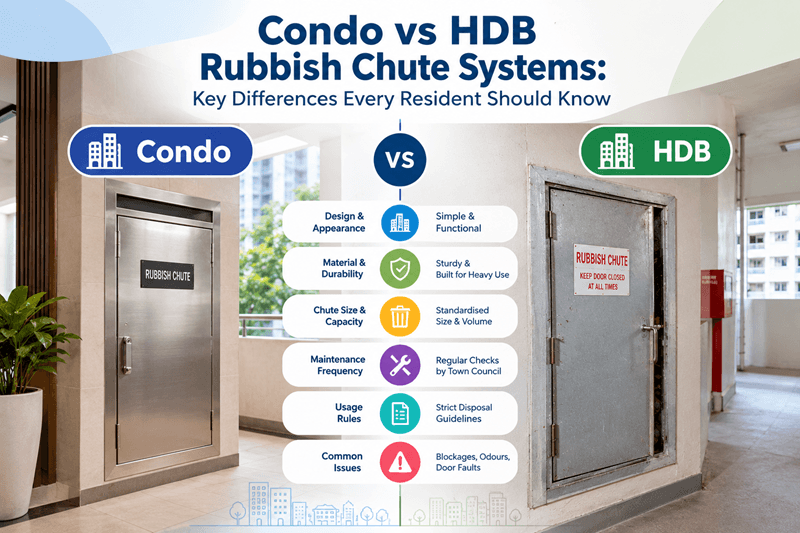
The condo vs hdb rubbish chute system comparison becomes clearer when you focus on three points: design, management, and repair responsibility.
HDB systems tend to serve a large number of homes through shared shafts under a public housing management structure. Condo systems fall under private property management and can feature layouts that vary between developments.
Both systems still share the same purpose. They move household waste from residential floors to a safe collection point.
New developments may also form part of centralised waste disposal in Singapore planning, where waste collection forms part of a wider building or estate system.
No matter which property type you live in, clean disposal habits and quick fault reporting can help keep the chute safe and usable.
Conclusion
Rubbish chutes may look simple from the outside, but their design and management can vary from one property type to another. HDB blocks tend to use shared systems managed through the relevant public housing maintenance structure, while condo common areas fall under MCST or building management.
Understanding the design, repair path, and centralised waste disposal approach in Singapore can help residents respond to faults with less confusion.
When a chute door jams, smells escape, or waste stops moving, start by finding out who manages the affected part. Knowing whether the issue falls under town council or MCST management can save time and help the right team tackle the problem.
Dealing with a Chute Issue in Your Building?
Whether it's an HDB block or a condo, our team can assess and handle chute repair or replacement.
Frequently Asked Questions:
Yes. The main differences can include layout, access, management, and maintenance responsibility. A condo vs hdb rubbish chute system may use a similar vertical shaft, but the building management structure changes who handles faults and repairs.
The MCST or managing agent manages common property matters. Management may appoint a contractor to inspect and repair the chute. Residents should report shared chute faults to the management office rather than hire a contractor for common property without approval.
Yes. Both can suffer from blockages when residents place large bags, bulky objects, or unsuitable waste into the chute. The location of the blockage and the way workers gain access can differ because of chute system differences between buildings.
Age can raise the risk of worn seals, corrosion, damaged hinges, and door faults. However, maintenance and usage also affect the condition of a chute. A newer condo system can still develop problems when waste blocks the shaft or parts suffer damage.
A resident can report a fault and ask for an inspection. For shared property, the town council, MCST, or building management decides what work the system needs. The party responsible for the property must approve major work before it starts.